Peptide Purity Analysis Solution
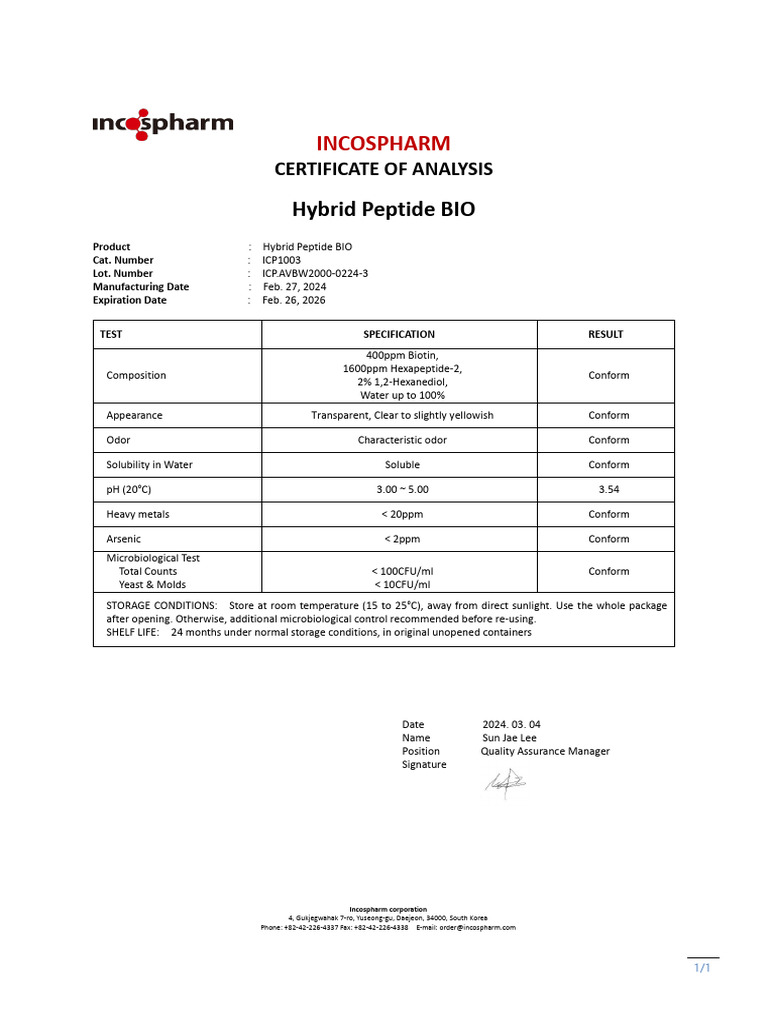
For scientists, acquiring validated peptides isn't simply a rule-- it's the structure of reliable experiments and research study reproducibility. Poor-quality peptides (those with undiscovered impurities, incorrect sequences, or broken down components) can cause deceptive data and irreproducible outcomes. Actually, healthy proteins and peptides are among one of the most extensively made use of lab reagents, yet researches have actually shown that their high quality is typically inadequate, resulting in inadequate data reproducibility. Beginning with appropriate lab recognition is for that reason an important part of a scientist's quality control operations.- Peptide testing documentation should be interpreted as batch-level logical evidence for research study product, not as clinical-use authorization.For example, in order to make sure success in different peptide experiments, it might be required to eliminate trifluoroacetic acid (TFA), or to evaluate the solubility of hydrophobic peptides prior to executing the called for experiments.In COA evaluation, it usually consists of HPLC pureness testing, mass spectrometry identity confirmation, and batch-specific documentation revealing the evaluated lot, method, results, and date.Notably, this purity figure is typically identified after purification (e.g. by HPLC) and concentrates on peptide pollutants-- it doesn't count residual water, salts, or counter-ions in the dried peptide powder.
Our Peptide Purity Resolution Services
A strong test record can sustain purity, identification, and batch traceability. It does not turn a study compound into a clinical item, and it does not change speculative validation in the scientist's very own system. Peptide pureness isn't simply a number on a tag-- it's a home window right into the high quality of the artificial procedure and a forecaster of how reliable your study results will certainly be. At Principles Analytics, we provide specialized peptide screening and quantitation services to sustain research study, pharmaceutical, and nutraceutical applications. Our research laboratory makes use of cutting edge instrumentation and validated approaches to ensure precise, reproducible data throughout even one of the most intricate peptide matrices. William is a research expert Research Materials at Peptides Lab UK, specialising in research study peptides, lab substances, and sourcing requirements for high-purity peptide products.Peptide Applications In Practical Foods And Wellness Products